News · 03.10.2019
Periodic Inspection Services for Earthing and Short-Circuiting Devices
 One of the questions we are asked more and more often by our customers concerns their obligations (as users) regarding the periodic inspection of the earthing and short-circuiting devices used by their electrician crews.
Earthing and short-circuiting devices are protective equipment against electrical risk and are of paramount importance for adequately protecting the work area. Although they are robust devices with a long service life, they must not only be used correctly but also be properly maintained throughout their service life in order to retain the properties for which they were designed and manufactured.
Earthing devices are technical equipment designed, tested and certified on the basis of the European standard SR EN 61230:2009. Under this standard, manufacturers of earthing devices are required to state in the user manuals of this equipment a series of checks on which the user’s safety during operation of the equipment depends.
These visual checks are recommended to be carried out by the user before each use of the device and consist of a visual inspection of the integrity of the assembly and of its main components (phase / earth clamps and cables).
The correctness (tightness) of the connections between components must also be checked by hand.
In addition, according to clause C.3.2.2 of the above-mentioned standard, “users are recommended to draw up their own guide for proving the integrity of a device” and it is also recommended that the user should determine “the interval between two periodic inspections, which may include in-service testing of the equipment”.
As regards the methods for performing “in-service testing of the equipment”, the same standard recommends the following two periodic testing methods:
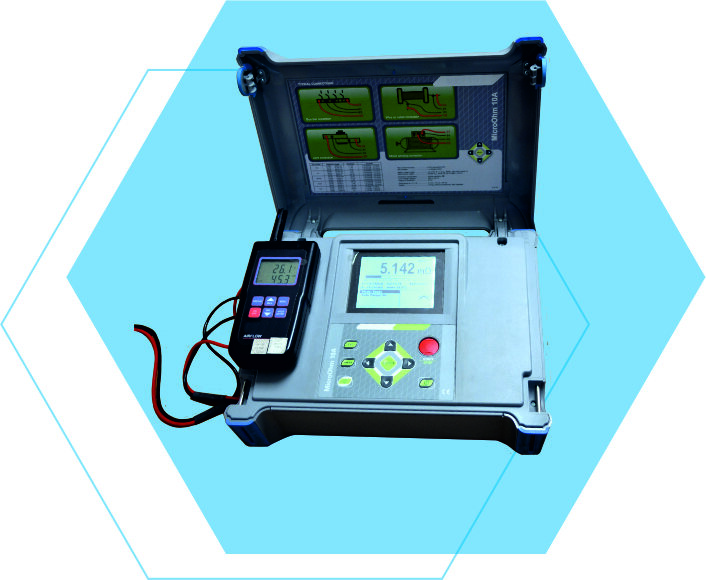
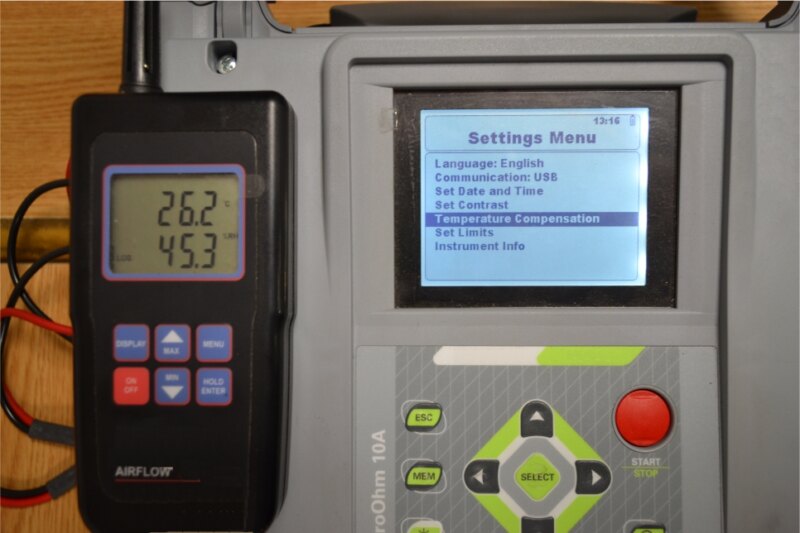
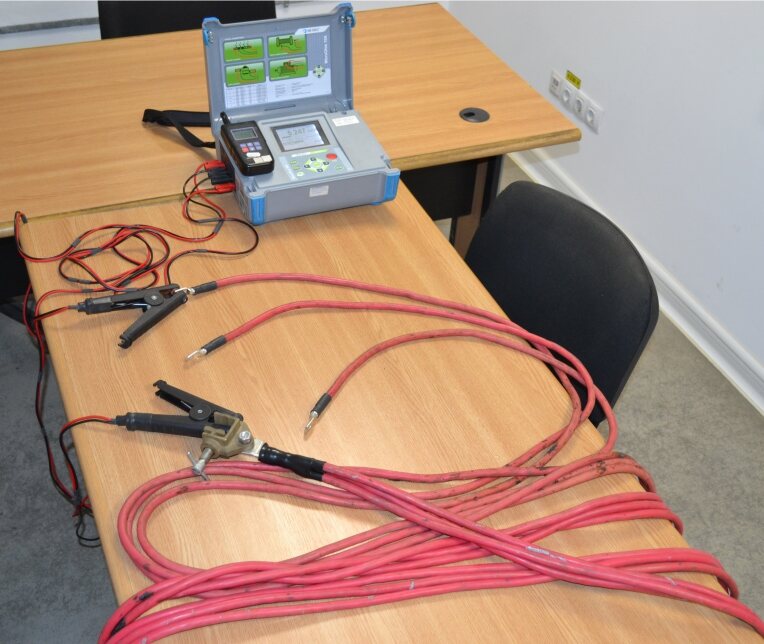
1. Periodic checking of the specific resistance of the portable earthing and short-circuiting device by means of a non-destructive measurement, which establishes that the increase in the resistance of the assembly due to use of the equipment (“ageing, contamination or corrosion, in particular of the contact surfaces of the ferrules and clamps”) is acceptable, so that the equipment can “operate safely during electrical short circuits”. The practical method for testing earthing devices is specified in the above-mentioned clause of the standard, and for interpreting the measurement results reference is made to another standard, the American ASTM F 2249.
2. At intervals of 5 years (for earthing devices used outdoors) and 10 years (for earthing devices used exclusively indoors), it is recommended that the cable terminations be cut off and the cable ends visually inspected for corrosion.
If the visual inspection reveals “signs of corrosion” or “broken strands, annealed copper strands”, the device must be “scrapped”; in all other cases – when no problems or damage are found – new terminations (lugs, fasteners, heat-shrink tubing) are fitted and the device can be returned to service.
Taking into account the recommendations of the two standards, Romind T&G offers its customers a Periodic Technical Inspection Service for Earthing Devices and recommends in the strongest terms that such a technical inspection be carried out every 3 years of use of the equipment and whenever there is any doubt about its conformity.
The periodic inspection carried out by Romind specialists includes both mechanical and electrical checks. On the mechanical side, the phase and earth clamps are visually inspected, their operation is checked, they are cleaned and greased (if necessary), and the condition of the conductors (their insulation and marking, with the marking renewed if necessary) and of the connections (lugs) is checked. On the electrical side, the electrical resistance of the assembly is checked, covering both the connections between the phase clamps and those between the phase clamps and the earth clamp. If any non-conformities are found, a repair estimate and a quotation for the repair service are issued.
On completion of the periodic inspection, an inspection report is issued.
We hope the information above will help you use your earthing devices correctly, giving you the certainty that maintenance work on electrical installations is carried out under conditions of maximum safety.